
Storm Damage to Roofs: What Insurance Actually Covers
In the event of a storm, your roof is one of the parts of your property that is most vulnerable to damage.
What’s more, the roof is also the part of a property where damage can be the most costly.
Investing in property insurance is a great way to protect yourself against these unexpected and unpredictable costs.
But, in some cases, what insurers will – and won’t – cover isn’t always as straightforward as you’d expect.
If your roof has been damaged during a storm, keep reading.
In this guide, our trusted, accredited roofing specialists have shared their guide to assessing your roof damage, and navigating the claims process for storm damage. They’ve also shared their top tips for understanding how roof insurers typically approach roof damage that has been caused by storms.
Common misconceptions about storm damage cover
One of the biggest misconceptions here is that, if any damage has been identified after bad weather, then it is automatically classed as storm damage.
However, when it comes to insurance claims for storm damage:
- Not all bad weather qualifies as a storm
- The roof damage must be sudden and it must be directly caused by the storm
- If it is a long-standing issue (which was then exposed during a storm) it may not be covered by your insurance
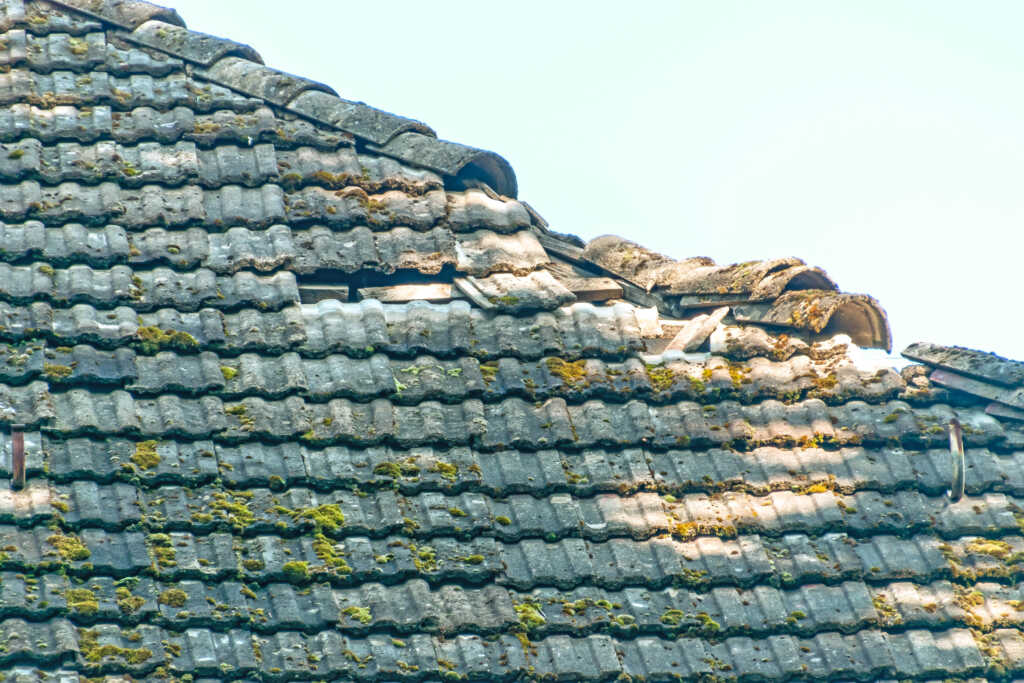
For example, if a few tiles slip after strong winds, but your tiles were already loose or deteriorating, then the claim may not be accepted by your insurer.
What do insurers count as a storm?
For bad weather to be classed as a storm, the weather conditions will need to meet specific criteria. This will be checked by insurers using local weather data, to confirm whether your area was hit by a storm.
Generally, this includes:
- Strong winds (often around 55 mph)
- Heavy rain, hail or snow
- Conditions that are severe enough to result in structural damage
Storm damage Vs Wear and tear
This is another common point where storm damage claims are rejected.
For damage to be classed as storm damage it has to be sudden and unexpected, and to have been directly caused by high winds or severe weather. Then, there often has to have been an immediate visible impact (e.g. tiles were blown off the roof).
In comparison, wear and tear is not covered as storm damage. Insurers class wear and tear as gradual deterioration over time and issues that existed before the storm occurred. These can be caused by age, weather exposure, insufficient maintenance, or a combination of these.
So, if issues arise in a storm, but the storm exposes an existing issue, then your insurers may argue that the cause of the damage is wear and tear, meaning it isn’t covered under storm damage.
What is typically covered under roof storm damage?
Common examples of roof damage caused by a storm include:
- Tiles dislodged
- Damage from falling trees or debris
- Structural damage (if the roof was in good condition before the storm)
Examples of damage types that are typically excluded from storm damage claims include:
- Gradual deterioration
- Poor maintenance (e.g. caused by blocked gutters)
- Pre-existing issues
- Issues caused by age (in some instances, if your roof is older, insurers may only partially cover your repair costs)
How do insurers assess your claim?
When you submit a claim, insurers will work to determine whether the damage was sudden and caused by the storm, or as a result of ongoing issues.
To achieve this, they will typically review and assess:
- Weather data for your area
- The condition of your roof
- The age of your roof
- Photos and any other evidence of the damage
- The financial impact of the damage, by having a loss adjuster inspect the property (this is usually just for larger claims)
How to submit after storm damage
If you need to submit a claim, be sure to act quickly and precisely.
- Document the damage immediately, with clear photos and videos
- Carry out temporary emergency repairs (if needed). You can take reasonable steps to prevent further damage (e.g. by temporarily sealing a leak, or covering an exposed area with tarpaulin). But, avoid starting any permanent repairs, as the insurer will need to assess the damage.
- Submit the initial claim.
- The insurer will then conduct an inspection or assessment (usually takes place within 1–2 weeks).
- Receive a decision and repair approval confirmation from the insurer (typically takes a few weeks). However, more complex claims may take longer.
- If accepted, confirm if your insurer has provided an approved contractor, requires you to use a contractor in their network, or will allow you to choose your own roofer.
If you enlist a trusted roofing contractor, they can help you to assess the damage and guide you through the claims process from start to finish.
At BS Roofing, we are roofing specialists with decades of experience under our belts. So, if your property has suffered storm damage, we’re here to help.