
What Insulation is Best for a New Roof?
If you’ve invested in a new roof, you’ll want to ensure that it is maintaining the very highest performance standards.
By choosing compatible, high performance roof insulation, you can significantly improve the thermal efficiency of your property. Alternatively, if your insulation is outdated, of a low quality or is otherwise ill-suited, then you could be consistently losing heat through your roof, representing a significant waste (both financially and environmentally).
To help you see the maximum return on your investment, our roofing experts have shared their guidance for choosing insulation for a new roof.
Keep reading to find out what different types of insulation are available to you, and which represents the best choice for your specific roof type.
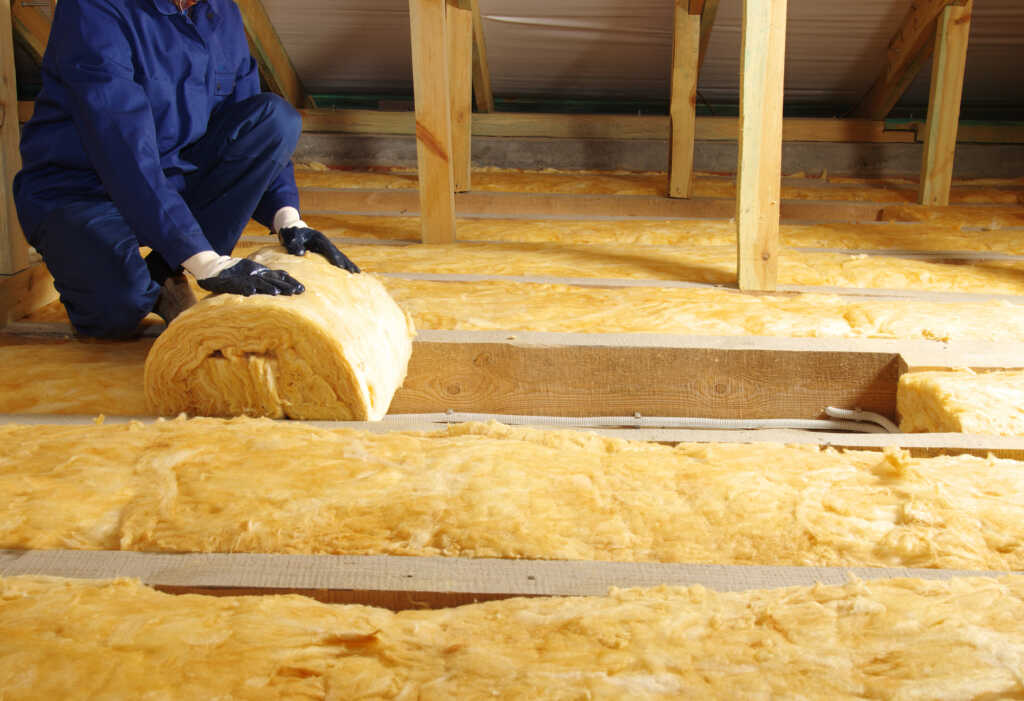
Why is roof insulation important?
If you’ve just installed a new roof, this is the perfect time to assess and upgrade your roofing insulation.
Research from the Energy Saving Trust found that, in the UK, around 25% of a home’s heat is lost through an uninsulated roof.
However, by adding or upgrading your roof insulation, you can dramatically reduce this figure. In fact, by installing 270mm of loft insulation in a semi-detached house, you could save up to £270 a year on your energy bills.
Roof insulation is a fantastic investment, as it minimises heat loss throughout the year. By keeping heat locked in the house, less energy is required to keep it feeling warm. Not only does this help you to be more sustainable and keep your bills as low as possible, but it also helps to stabilise the temperature in your home, making it more comfortable throughout the year.
Recommended roof insulation for different roof types
To achieve the best results, you should choose your roof insulation based on your roof type.
Below, we’ve shared our roof insulation recommendations for some of the most common roof types.
-
Cold roof
- Definition: When insulation is added in between and on top of the ceiling joists.
- Priorities for insulation: The insulation needs to be of a flexible shape, so that it can fill all gaps, including hard-to-reach areas.
- Recommended insulation:
- Mineral wool
- Loose-fill insulation
-
Warm roof (Commonly used for attic conversions)
- Definition: When insulation is added underneath the ceiling joists.
- Priorities for insulation: To maximise the space, the roof insulation should form a thin, even layer, but still achieve the same high performance.
- Recommended insulation:
- Rigid foam boards
- Multifoil insulation
-
Mansard or Dormer roof
- Definition: Sloped roofs, with outward projections featuring vertical window(s). Commonly seen in townhouses and roof conversions.
- Priorities for insulation: Compatibility with the more complex roof shape, while still allowing the roof to be used as a room.
- Recommended insulation:
- Rigid insulation boards
- Multifoil
- Spray foam (for hard-to-reach areas)
-
Flat roof
- Definition: A flat roof design, most commonly seen in garages or extensions.
- Priorities for insulation: To maximise the space available, with a thin, even layer of high performance insulation.
- Recommended insulation:
- Rigid foam boards
- Multifoil insulation
At B&S Roofing, we offer a comprehensive roofing service. Our skilled team of specialists can provide everything from roofing supply services, to roofing repairs, re-roofing and even emergency callout.
So, if you’re looking to upgrade your roofing to a more thermally efficient model, the B&S Roofing is on hand to advise.