
Fascias & Soffits: When to Repair and When to Replace
It’s easy to forget about fascias and soffits. But, they play a critical role in protecting your roof – and indeed, the rest of your home – from the weather.
A fascia is a board that runs along the edge of the roof. It is installed at the point where the roof meets the building’s outer walls. Its job is to support the guttering and protect the roof rafters from weather, while also giving the roofline a neat, finished look.
The soffits sit underneath the roof overhang. This helps to keep the roof eaves sealed, while still providing ventilation in the loft.
Together, these features help to protect your roof from water damage, while promoting proper ventilation in the roof space (which is key for reducing the risk of condensation and damp).
As with all parts of your home’s exterior, fascias and soffits are constantly exposed to the elements. As a result, without proper treatment, an initially small roofline issue can quickly escalate into roof timber damage.
In this article, we’ve outlined the key indicators that your fascias and soffits may need repairs, and when to know if a full replacement is the best course of action.
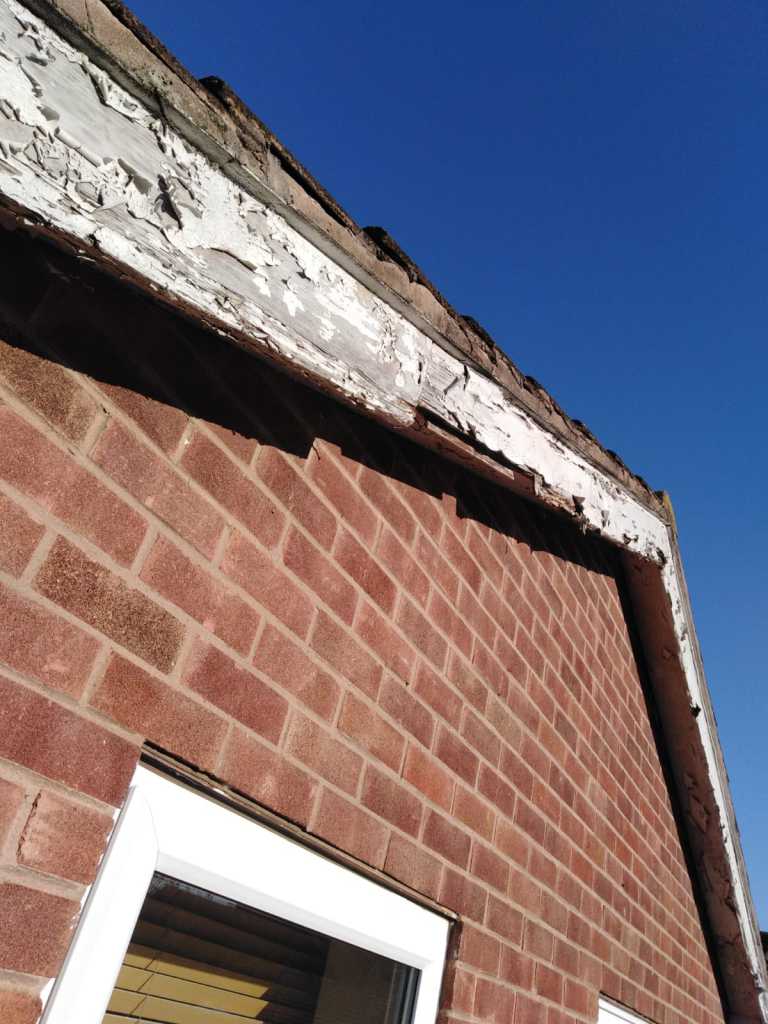
Signs your fascias and soffits may need attention
By spotting problems early, you can minimise the risk of it developing into more extensive (and costly) damage.
The most common warning signs of an issue include:
- Consistently peeling or blistering paint – If they are made from painted timber, then consistently peeling, flaking or blistering paint can be an early indicator that moisture is getting into the wood. A one-off instance can be repaired and repainted. But if the problem keeps returning, then it could mean the timber underneath is deteriorating.
- Gutters pulling away from the fascia – The guttering requires the fascia for support. So, if the gutters start to sag or pull away from the roofline, this could mean the fascia board is no longer strong enough to support their weight.
- Soft timber – Healthy timber feels solid. So, if the fascia or soffit feel soft, spongy or crumbly, this usually means rot has developed. In this instance, the timber needs replacing, before the rot is able to spread further.
- Water staining below the roofline – Damp patches or water staining usually indicate that water isn’t being properly directed away from the property. This may be a result of damaged guttering, leaking joints or deteriorating fascias and soffits. So, you’ll need to arrange for a professional to investigate the issue and diagnose the root cause, before the issue is able to escalate.
- Gaps or cracked joints – Although this might seem like a minor issue, visible gaps or cracks can allow water, insects and even small birds to enter the roof space. So, if left unresolved, this can quickly escalate into much bigger problems.
- Damp or condensation in the loft – Soffits play a key role in ventilating the roof space. If they fail in this job, then moisture can build up inside the loft. Over time, this can lead to timber decay.
Should you repair or replace fascias and soffits?

The right solution will depend on the system’s condition and the extent of the damage.
In many cases, if the damage is limited to one small area and the surrounding boards remain in good condition, then a repair may be sufficient. Isolated issues in otherwise sound timber can often be repaired.
However, replacement is usually recommended if:
- Rot has spread across more than one area
- Frequent repainting is needed
- Regular repairs and re-repairs are needed
- The guttering is failing, and is no longer properly supported
In these instances, while replacing one small section may solve the immediate problem, it won’t prevent further issues from developing elsewhere.
It’s also important to note that adequate ventilation in the roof is a building regulation requirement, not just a cosmetic point. So, it’s critical that you ensure this requirement is met, to ensure legal compliance.
So, in these scenarios, fully replacing the roofline presents the better long-term value, and ensures a durable, longer-lasting solution.
If you are replacing your roofline, then you may want to consider investing in a uPVC replacement. uPVC is the standard low-maintenance choice for most UK homes as, unlike traditional timber, uPVC doesn’t require regular painting and is highly moisture and weather resistant. This means it typically offers much greater durability, with significantly reduced maintenance requirements.
If you’re thinking about repairing or replacing your fascias and soffits, then the B&S Roofing team is on hand to help.
We offer professional roofline inspections, designed to assess the condition of your fascias, soffits and guttering. Whether you just need a simple repair job, or require a full replacement, our skilled team are here to ensure a dependable, durable and premium quality resolution.
To book your free roofline inspection with B&S Roofing, speak to a member of our team.